
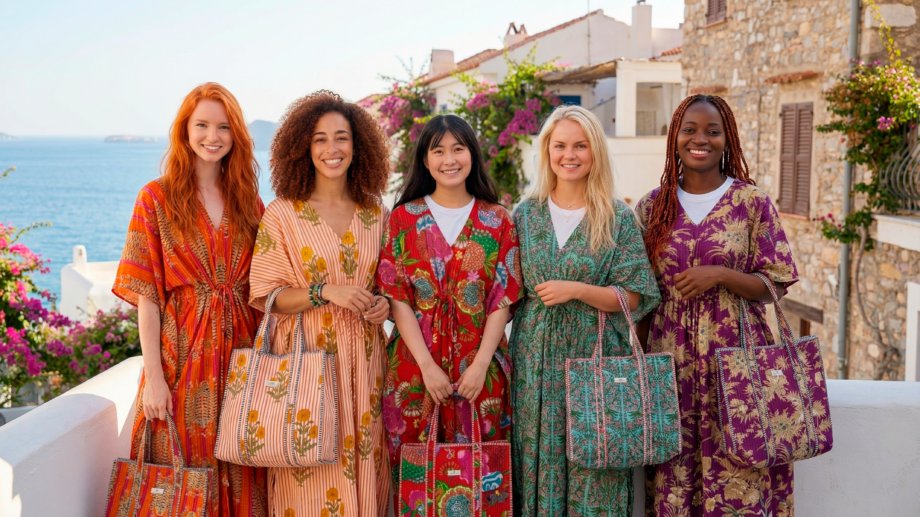
Women are looking for unique clothes to express their identity, express their personality and stand out in a world where individuality becomes an act of freedom. 👗
The underlying motivations of women in their search for unique clothing and personalised fashion
At the heart of women’s quest for unique clothing lies a fundamental need: the need to feel authentic. Women are not simply looking for fashion items, but for pieces that tell their personal story. This motivation goes beyond mere aesthetics; it touches on the very essence of what it means to dress for oneself.
Modern life demands that women fulfil multiple roles. They are professionals, creative individuals, mothers, friends and citizens. Each of these roles calls for a different style. Unique clothing allows for this flexibility, offering the chance to wear pieces that suit every facet of their lives. Smart trousers by day, a bohemian dress by night: so many ways to reinvent oneself without compromising who you are.
The search for something unique also stems from a desire for control. In a world saturated with fast fashion and identical collections, choosing different clothes becomes an act of gentle rebellion. Women want to know that no one else is wearing exactly the same outfit, that their choice is personal and well-considered. This quest for difference is not superficial; it is deeply linked to self-assertion and is often part of a slow fashion approach.
Fashion, personal style and identity: how women develop their own way of wearing each garment
Personal style is not innate; it is developed over the years through experiences and discoveries. Every woman develops her own sartorial vocabulary, a unique language composed of colours, fabrics and shapes that reflect her personality. This development is an ongoing process, a constant quest for harmony between the inner and outer self.
Fashion provides the vocabulary, but it is personal style that crafts the sentence. A woman can follow trends whilst remaining true to her essence. She learns to understand her body, her preferences and her strengths. She discovers which fabrics flatter her, which colours brighten her complexion, and which styles suit her figure. This intimate self-knowledge transforms every purchase into a conscious decision. For many, this involves a boho-chic aesthetic or the desire to create a truly personal boho-chic wardrobe.
Clothing thus becomes a means of self-expression. Every piece chosen with care conveys something to the world: confidence, creativity, sophistication or freedom. Women who seek out unique garments understand that dressing is an art, a form of non-verbal communication as powerful as words. They invest time and energy in finding pieces that reflect their personal vision of beauty and elegance.
Identity, society and the world: difference, politics, history and social status as reflected through the clothing and the women
Clothes are never neutral. They embody the history, culture and values of an era. Over the years, women have used fashion as a tool for liberation and protest. Trousers, once reserved for men, have become a symbol of women’s freedom. The short skirts of the 1920s represented a rebellion against convention. Every garment carries political and social significance.
Today, the search for unique clothing is part of this historical tradition. Women who choose distinctive pieces are asserting their right to self-determination. They reject ready-made moulds and restrictive social expectations. This quest for difference is a form of gentle resistance against the standardisation of the world. It often manifests itself in a preference for ethnic chic pieces or for garments inspired by traditional craftsmanship.
Social status remains linked to clothing, albeit in a more nuanced way than in the past. Women understand that their choice of clothing influences how others perceive them. Some seek out prestigious brands to assert their social standing, whilst others choose authenticity and originality as markers of status. In both cases, unique garments become tools for establishing one’s place in society.
Luxury, dreams, brands, prices and money: the appeal of one-of-a-kind pieces in women’s lives and the world of fashion
Luxury is so appealing because it promises exclusivity. A one-off piece, a limited edition, a handcrafted creation: these concepts strike a deep chord with women who are looking for something different. The high price tag becomes a guarantee of quality, rarity and prestige. Yet luxury is not always synonymous with spending money without thinking.
Modern women are savvy in their choices. They look for the best value for money, pieces that will last for years, and items that are worth the investment. A high-quality dress, made from beautiful fabric, can be worn for a decade. It is as much an economic calculation as it is an emotional one. The dream of luxury is becoming more accessible: it is no longer just about buying expensive items, but about buying wisely. This is also why more and more women are taking an interest in handcrafted pieces that hold greater value.
Brands play a crucial role in this dynamic. Some women seek out established brands for their reputation and heritage. Others prefer emerging designers, independent boutiques and artisans who offer authentic pieces. This diversity of choice reflects the complexity of women’s motivations. The world of fashion has fragmented into a thousand different realms, each offering its own vision of luxury and exclusivity. In this context, trends in premium artisanal fashion particularly appeal to those who wish to combine beauty, rarity and meaning.
The influence of social media, trends, France and the years: how Instagram and Facebook are shaping women’s styles
Social media has transformed the way women discover, share and consume fashion. Instagram and Facebook are no longer simply communication platforms; they are virtual galleries where anyone can showcase their personal style. Influencers, fashion bloggers and independent designers are shaping trends in real time.
This democratisation of fashion has paradoxical effects. On the one hand, it offers endless inspiration and allows women to discover styles they would never otherwise have encountered. On the other hand, it creates pressure to conform: everyone is wearing the same trendy items at the same time. Women seeking something unique must strike a balance between inspiration and authenticity, between following trends and staying true to their personal vision.
In France, fashion has always held a special place. French elegance is based on a simple principle: quality over quantity, timeless style over fleeting trends. This philosophy influences French women in their search for unique garments. They favour essential pieces, high-quality basics, and items that stand the test of time without losing their appeal. Social media amplifies this trend, allowing women to share and showcase their thoughtful fashion choices. This spirit is evident in styles such as bohemian style or Goa clothing, which focus on identity rather than simply copying trends.
Shops, brands, buying of clothing, items and pieces: the search for that special something in every outfit and collection
The shopping experience has changed dramatically. Women no longer simply visit a local shop; they explore the world in search of unique pieces. Online shops, specialist marketplaces and independent designers offer an unprecedented variety. Every purchase becomes a quest, an adventure in the search for the perfect item.
This quest for uniqueness extends to every outfit and every collection. Women think in terms of combinations, cohesive ensembles and pieces that complement one another. A dress alone is no longer enough; one must find the accessories to go with it, the shoes that complement it, and the overall style it conveys. This holistic approach transforms every purchase into a strategic decision.
Brands have recognised this shift. They now offer more diverse collections, limited editions and exclusive collaborations. Some, such as Bohosoleil, specialise in bohemian and unique clothing, offering pieces that defy standardisation. These brands understand that women are looking for items with soul, clothes that tell a story and reflect values of authenticity and freedom. This can take the form of an Indian dress, ethnic dresses or even a caftan with unique cuts.
Fabric, silhouette, accessories, style, freedom and beauty: self-expression through clothing, dresses, jeans and trousers
Fabric is fundamental. A woman looking for unique garments pays attention to texture, composition and feel. Organic cotton, silk, linen, merino wool: each fabric offers a different experience. It influences comfort, durability and environmental impact. Conscious women choose fabrics that reflect their values as much as their aesthetic preferences. Handcrafted fabrics such as Indian block print or printed cotton fabric perfectly illustrate this quest for uniqueness.
Attitudes towards the body have also changed. Women no longer seek to conform to imposed standards; they look for clothes that celebrate their bodies just as they are. A flowing dress that hugs the curves without constricting them, jeans that hug the figure without flattening it, trousers that offer freedom of movement: these choices reflect self-acceptance and a quest for genuine comfort. This also explains the appeal of loose-fitting, feminine pieces such as the women’s kimono or the kimono dressing gown.
Accessories play a crucial role in creating a personal look. A belt, a scarf, jewellery, shoes: these small details transform a simple outfit into a unique creation. Women use accessories to express their creativity, to add personal touches that make all the difference. This freedom of expression through clothing and accessories lies at the heart of women’s quest for beauty and authenticity. A handcrafted tote bag, a sarong or a bohemian-inspired piece can be all it takes to define a look.
FAQ: Understanding why women seek out unique clothing in fashion and society
Why do women want unique clothes?
Women seek out unique clothing to assert their identity, express their personality and stand out from the crowd. This quest stems from a deep-seated need for authenticity and control over their image. In a world saturated with fast fashion, choosing something unique becomes an act of personal freedom and self-determination.
Does fashion really influence women’s personalities?
Fashion and personality have a two-way relationship. Clothes do not create personality, but they express and reinforce it. A woman who wears clothes that reflect her true nature feels more confident and authentic. Fashion becomes a mirror of who we really are.
Is wearing unique clothing linked to social status?
Yes, but in a complex way. Historically, clothing has always been a marker of social status. Today, this relationship persists, but it has become more nuanced. Uniqueness can signify wealth and access to luxury, but also creativity, authenticity and strong personal values. Social status is now measured by the coherence and intentionality of one’s clothing choices.
Are social media changing the way we dress?
Absolutely. Instagram and Facebook have made fashion accessible to everyone and created new aesthetic standards. They offer endless inspiration but also create pressure to conform. Women need to strike a balance between drawing inspiration from trends and staying true to their own unique personal style.
Why has personal style become so important today?
Personal style has become important because it represents autonomy and self-determination. In a society that imposes numerous roles and expectations, personal style is an area where every woman can exercise complete control. It is a form of expression that requires no permission.
Do brands influence women’s choice of clothing?
Brands play a significant role, but modern women are critical and selective. They choose the brands that align with their values, their aesthetic and their budget. Brands that offer a sense of authenticity, a sense of quality and a sense of uniqueness, such as those specialising in bohemian clothing, are gaining the trust of women looking for items that are truly different.
Conclusion: the search for clothing that is unique as an expression of freedom, of style and feminine identity in contemporary fashion
The search for unique clothing is not merely a passing trend; it is an expression of a profound shift in the way women perceive themselves and present themselves to the world. Over the years, women’s fashion has evolved from a simple act of conformity into a true art of self-expression.
Women today understand that every item of clothing carries meaning, that every choice is a statement. They seek pieces that reflect their vision of beauty, their values and their personal history. This quest for uniqueness is inextricably linked to the quest for freedom, identity and authenticity.
In this context, unique garments become much more than mere fashion items: they become tools for female empowerment. Whether through established brands, independent designers or specialist boutiques offering bohemian and authentic collections, women are finding ways to express who they truly are. Fashion, when it is conscious and intentional, becomes an act of freedom, a rejection of uniformity and a celebration of female diversity in all its richness.