
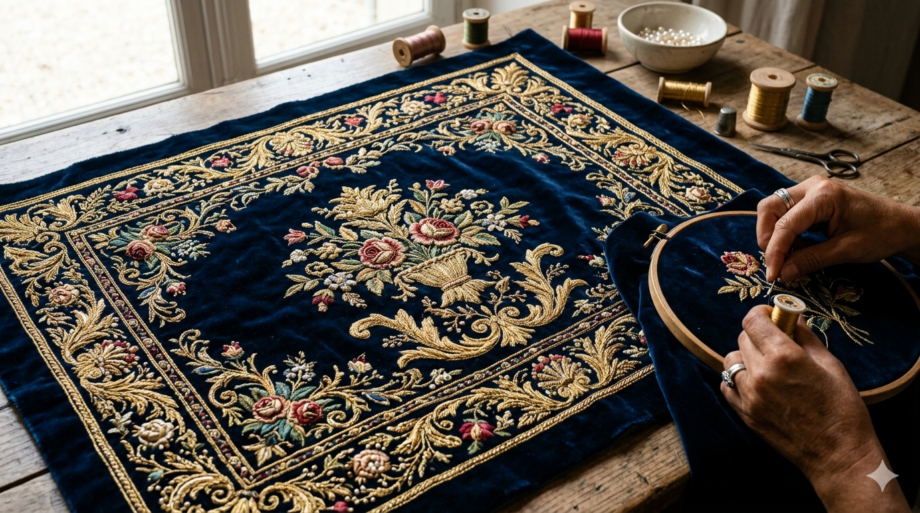
Premium artisan fashion is experiencing a renewal of great depth, driven by consumers seeking authenticity and meaning. 🌿
The evolution of fashion, of craftsmanship and of luxury within the major trends in the industry
The premium artisan fashion market is evolving rapidly, with a strong emphasis on craftsmanship. Consumers are no longer simply looking for a product, but for a story, traceability and a guarantee of quality. This shift is part of a broader trend towards slow fashion and more conscious consumption.
Transparency regarding manufacturing methods is also becoming a key requirement. Brands that document their creative processes gain credibility and customer loyalty. This is particularly true for fashion houses and labels that specialise in high-value artisanal pieces.
The importance of artisanal craftsmanship in luxury fashion and haute couture
Artisanal expertise is the cornerstone of the luxury industry. Without it, the major fashion houses would lose their legitimacy and uniqueness, as it underpins the value and identity of their products.
Every technique — whether embroidery, leatherwork or haute couture — requires years of training and refinement. These rare skills lend the pieces a unique quality that is hard to replicate. The same principle applies to Indian block prints, where the human touch remains central to the final quality.
Artisans are not merely mere executors: they are the guardians of a living art. Their expertise clearly distinguishes a handcrafted product from from an industrial product, a difference which consumers value highly.
Luxury houses and iconic brands that champion craftsmanship
Several luxury houses strongly embody craftsmanship. Hermès highlights its French workshops and the extensive training of its artisans: every bag is entirely made by hand by a single artisan, from start to finish.
Dior draws on its haute couture ateliers to preserve traditional techniques whilst bringing them up to date, notably through in-house programmes designed to pass on its expertise.
Bottega Veneta has built its identity around leatherwork and the Intrecciato weave, making craftsmanship its hallmark rather than a logo. For its part, LVMH is promoting the preservation of traditional crafts through its Métiers d’Excellence programme. This celebration of craftsmanship and time reflects the growing interest in unique garments and pieces that convey a sense of identity.
Digital innovation and technology in fashion
In the world of premium artisanal fashion, technology complements craftsmanship without replacing it. 3D modelling and laser cutting minimise errors and waste, whilst the finishing touches are still applied by hand.
Digital technology also enhances communication: social media and videos highlight the behind-the-scenes of manufacturing and make the story of the product just as important as its aesthetics.
Sustainability and environmental responsibility
Sustainability has become a core value in the premium artisanal fashion sector. Unlike fast fashion, artisanal production is based on limited volumes, carefully selected materials and expert craftsmanship, all in line with environmental considerations. Consumers are increasingly mindful of the origin of materials, working conditions and the lifespan of garments.
Brands such as Bohosoleil exemplify this approach by offering clothing clothing and accessories made in a handcrafted manner, using natural materials and a production process on a human scale, in contrast to industrial overproduction. The creations in fabric cotton printed or made from cotton hand-printed fabric meet particularly well to this expectation of sustainability.
Workshops, craftspeople and traditional techniques
At the heart of premium artisanal fashion lies the workshop. It is here that techniques are passed down, skills are honed and pieces are brought to life. Each workshop has its own culture and methods, some of which have been jealously guarded for generations.
Hand sewing, natural dyeing, traditional weaving and needle embroidery are all techniques that require years of practice. These skills cannot be learned automatically: they are embodied by artisans who continue to hone their craft throughout their careers. This is also what gives character to pieces such as the handcrafted kimono or the lightweight block-print cotton dressing gown.
Supporting these workshops means supporting a complex and valuable chain of people, every link in which contributes to the final quality of the product. 🧵
Manufacture of luxury goods
The creation of a handcrafted luxury product is based on a meticulous process that is a far cry from industrial production. In the case of a leather bag, every stage — from selecting the hides to cutting, assembling, sewing and finishing — is carried out by hand by specialist craftsmen, ensuring a high standard of quality.
In haute couture, the level of complexity is even greater: a single garment can require hundreds of hours of work and draw on a range of specialist skills such as embroidery, featherwork and floral design, all of which are essential to the creation of unique pieces. On a different scale, this same level of craftsmanship can be found in everyday accessories such as the handcrafted tote bag or in certain collections inspired by Indian textile art.
The global fashion market and developments in the luxury industry
Globally, the premium artisanal fashion market is experiencing sustained growth. New generations of consumers, particularly in Asia and North America, are showing a growing interest in products with a strong cultural and artisanal identity.
This trend is prompting major luxury brands to rethink their production and communication models. The era of the ubiquitous logo is gradually giving way to an era of visible craftsmanship, where it is the intrinsic quality of the product that speaks for itself.
The underlying trends — the quest for authenticity, the rejection of overproduction, and the celebration of local produce — all point towards the same future: one of slower, more thoughtful and more sustainable fashion. This vision is fully in line with that of a boho-chic wardrobe built around pieces chosen to last.
Preserving our heritage of craftsmanship
Preserving the heritage of craftsmanship in an era dominated by digital technology and industrial production poses a major challenge for traditional workshops, which face high costs, recruitment difficulties and fierce competition from standardised products.
In response to this, a number of strategies are emerging: some fashion houses are featuring their workshops in their communications to promote transparency, whilst others are collaborating with institutions to ensure that their expertise is passed on to future generations.
At the same time, new brands such as Bohosoleil are actively contributing to this conservation. By choosing products from artisanal supply chains, consumers contribute directly to the preservation of this a24> local skills and the continuity of craftsmanship. This applies just as much to a handcrafted caftan as it does as it does for a kimono-style dressing gown or a hand-printed textile accessory.
Conclusion
Premium artisanal fashion is not merely a nostalgic trend: it is a concrete response to the expectations of an era that is rediscovering the value of time, craftsmanship and materials. Straddling tradition and innovation, the houses and brands that succeed in preserving their expertise whilst adapting to new ways of living will occupy a prominent place in the industry of the future.
For consumers, discovering and supporting these brands — whether they are major fashion houses or small-scale artisanal labels such as Bohosoleil — means playing an active part in shaping a fashion industry that is more authentic, more sustainable and deeply rooted in a living culture. 🌿