
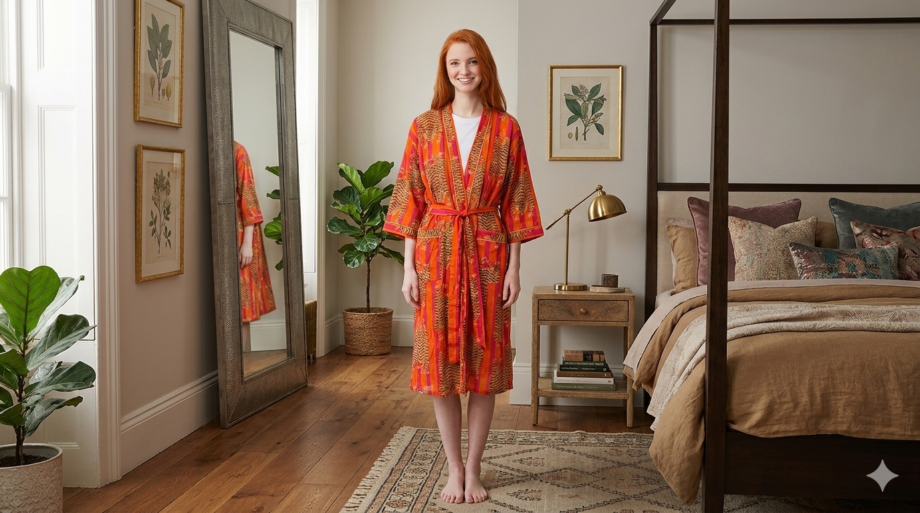
The handcrafted kimono is now seen as much more than just a garment: it’s a part of life. 🌸
What is a handcrafted kimono?
The kimono is a traditional Japanese garment that has been worn in Japan for centuries. In its handcrafted form, it differs radically from mass-produced versions in terms of the quality of its craftsmanship: each piece is made by hand, often in a workshop, by artisans who have mastered a craft passed down from generation to generation.
Unlike a mass-produced dress or jacket, a handcrafted kimono is characterised by meticulous attention to detail: the choice of fabric, the precision of the patterns, and the care taken with every stitch. It embodies both Japanese tradition and a certain notion of timeless elegance. This same quest for balance between style and comfort is also evident in the world of women’s kimonos and kimono dressing gowns.
It is not merely a garment. It is a textile creation steeped in history and beauty.
The materials used in a handcrafted kimono
The choice of fabric is key to defining a high-quality, handcrafted kimono. The most sought-after materials are silk, cotton and blends of natural fibres that are soft to the touch.
Silk adds shine and drape. It is often associated with formal or evening kimonos, creating a refined and chic look. Cotton, which is more affordable, offers superior everyday comfort; it is a breathable and durable fabric, ideal for both indoor and outdoor wear. If you’re looking above all for a piece that’s easy to wear, a cotton kimono remains the most versatile option.
A handcrafted kimono can also be made from hybrid fabrics, blending modernity and tradition. What matters most of all is that the fabric is selected with care, in harmony with the cut and the patterns chosen. The designs made from a fabric cotton print or inspired by Indian block print perfectly illustrate this combination of textile expertise and visual originality.
The distinctive features of a handcrafted kimono
There are several features that help identify a genuine handcrafted kimono:
- The long, flowing sleeves, characteristic of the traditional Japanese cut
- The patterns: floral, geometric, landscapes — often printed or hand-embroidered
- The belt (or obi), tied in a specific way, which defines the silhouette
- La coupe droite, adaptée à toutes les tailles et morphologies
These elements are not merely decorative. They form part of the garment’s core identity and its connection to Japanese tradition. An authentic, handcrafted kimono adheres to these conventions whilst incorporating a touch of modernity in its colours or patterns. This is also what sets it apart from a simple indoor garment or a classic women’s dressing gown.
Handcrafted kimonos at home: a way of life 🏡
At home, a handcrafted kimono can be worn as an elegant piece of loungewear. It makes a stylish alternative to a bathrobe or a cotton dressing gown, offering a far more refined look. Worn over loose-fitting trousers or directly against the skin, it creates a soft, comfortable outfit without compromising on style.
A cotton house kimono is particularly well suited to this purpose. The fabric is durable, easy to wash and retains its natural drape after every wash. With this in mind, a lightweight block-print cotton dressing gown may also appeal to those who prefer soft, breathable and elegant pieces for the home.
It also makes the perfect gift: it’s suitable for all seasons, fits a range of sizes, and is ideal for the everyday lives of both women and men.
Handcrafted kimono for outdoor wear: a bold fashion statement
Worn as outerwear, a handcrafted kimono serves as a light jacket or an open-fronted overshirt. In summer, it can be slipped over a simple dress or a pair of jeans to add a touch of oriental elegance to a casual outfit. If you’re looking for practical ideas, this guide on how to wear a cotton kimono with elegance makes it very easy to visualise the right combinations.
The Bohosoleil kimono, for example, is a perfect illustration of this versatile style: designed with a free-spirited, bohemian flair, it is just as suitable for a night out on the town as it is for a day at the seaside. Its flowing cut and carefully chosen patterns give it an elegant look without ever weighing down the silhouette.
Available in blue, red, green, black or white, these colours make it easy to pair with different outfits, for a confident and cohesive look. It also fits in very well with a women’s summer outfit, especially if you’re looking for a statement piece that’s easy to wear.
How do you choose a handmade kimono?
When choosing a handcrafted kimono, there are several objective criteria to consider:
1. The fabric: silk for special occasions, cotton for everyday wear. Choose natural, soft and breathable fabrics.
2. Patterns: floral, abstract, traditional Japanese — choose something that suits your style and the clothes you usually wear.
3. Size: Kimono-style garments are generally loose-fitting, but always check the manufacturer’s size guide. A kimono that is too large loses its elegance; one that is too small restricts movement.
4. Intended use: indoor, outdoor, formal occasions, everyday use — each use calls for a different model.
5. The price: a genuine handcrafted kimono comes at a price. Be wary of items offered at very low prices, which are often mass-produced despite misleading labels.
For everyday use, the same quality criteria as for a cotton bathrobe still apply: high-quality fabric, sturdy construction, a comfortable fit and easy care.
Where can I buy a handcrafted high-quality kimono?
When buying a handmade kimono, it is important to be able to distinguish between pieces that are genuinely handmade and those that are simply labelled as such. Here are a few useful pointers:
Look for workshops or designers who clearly state their production methods, materials and place of manufacture. In France, several online shops offer handcrafted kimonos with transparent information on delivery, returns, privacy policy and legal notices.
Check that there is a detailed FAQ and clear payment terms. These factors are a sign of a reputable shop.
You can also check customer reviews, photos of the products being worn, and details of the materials. A good, handcrafted piece deserves an honest and accurate description. You can contact the seller directly with any questions before adding the product to your basket. To compare different styles, lengths and materials, you can also browse the Bohosoleil kimono collection 🛒
Styles and outfit ideas featuring a handmade kimono
Handcrafted kimonos lend themselves to a wide variety of styles. Here are a few ideas for incorporating them into your wardrobe:
Bohemian look: a kimono with floral patterns over a flowing white dress, sandals and natural jewellery. Perfect for summer, outdoors or for a casual evening out.
A chic, minimalist look: a plain blue silk kimono worn over high-waisted black trousers and heels. Understated, modern elegance.
Cosy loungewear: a soft cotton kimono over comfortable leggings, for a relaxing moment at home without compromising on style. If you like this look, a well-chosen women’s dressing gown can complete your loungewear wardrobe.
Urban fashion look: a kimono worn as a light jacket over jeans and a white T-shirt. A bold Japanese touch in a contemporary style.
These combinations demonstrate the true versatility of the handcrafted kimono: it adapts, reinvents itself, and is equally suited to both home life and going out.
Is it possible to make your own handcrafted kimono?
Making a handmade kimono is entirely possible, but it requires skill and patience. The kimono cut is one of the most accessible in traditional Japanese dressmaking: it is based mainly on straight lines, with no complex curves.
The key steps are as follows: choosing the fabric (cotton or silk, depending on the intended use), cutting out the pieces using a pattern suited to your size, sewing the sleeves and body together, and then finishing the waistband. Online tutorials and specialist books will help you get started if you have an intermediate level of sewing experience.
Making your own kimono also means fully embracing this Japanese textile art and creating a unique piece that reflects your own personality.
The handcrafted kimono: a long-lasting investment
Beyond just fashion, the handcrafted kimono represents a sustainable and responsible choice. Unlike clothes produced in large batches, a piece made by hand from high-quality a17> materials of quality that lasts over time, withstands wear and tear and retains its beauty.
It is also a gesture in support of artisanal craftsmanship, often practised by small workshops or independent designers who keep a living Japanese tradition alive. By choosing a handcrafted kimono, you are supporting an economy based on care and creativity, in stark contrast to fast fashion.
Whether you wear it at home or out and about, this handcrafted kimono is a unique piece that brings elegance, comfort and depth to your life. ✨ ✨